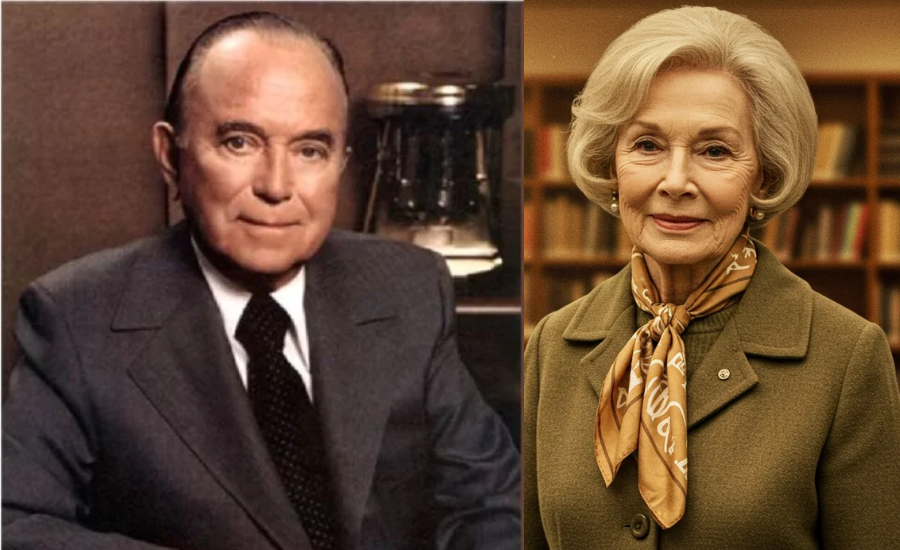
Marilyn Kroc Barg was an American philanthropist best known as the only child of Ray Kroc, the businessman who transformed McDonald’s into a global fast-food company. Born on October 15, 1924, she was Ray Kroc’s daughter from his first marriage to Ethel Fleming. Although she was connected to one of the most recognizable business families in America, Marilyn largely avoided the public spotlight and lived a relatively private life.
Barg became known particularly for her philanthropic interests. She supported charitable causes and was involved with organizations connected to her father’s wealth and legacy. She was married to Rowland F. Barg, and the couple lived a comparatively private life away from the intense attention surrounding the McDonald’s empire. Marilyn Kroc Barg died on September 11, 1973, at the age of 48, several years before her father’s death in 1984. Her life is often remembered in connection with Ray Kroc, but she did not become a major public figure or business leader herself.
Bio Table
| Name at Birth | Marilyn Kroc; her Chicago Tribune obituary identifies her formally as “Lynn J. Barg, née Kroc” — a discrepancy addressed below |
|---|---|
| Born | October 15, 1924, in Chicago (Cook County), Illinois |
| Father | Raymond A. “Ray” Kroc, businessman who transformed McDonald’s into a global franchise |
| Mother | Ethel J. Kroc (née Fleming), Ray Kroc’s first wife — confirmed directly by Marilyn’s own obituary |
| Siblings | None; she was Ray and Ethel Kroc’s only child |
| Parents’ Divorce | 1961 |
| Marriage(s) | Married James W. Barg on May 28, 1960, in Cook County, Illinois; some sources report an earlier marriage to Sylvester Nordly Nelson in 1949, though this isn’t confirmed by her obituary |
| Children | Genuinely unclear; her obituary does not mention children, and sources disagree on whether any existed |
| Residence | Arlington Heights, Illinois, formerly Evanston |
| Occupation | No verified evidence she held a formal role at McDonald’s; reported interest in horse breeding and philanthropy |
| Died | Reported as either September 11 or September 13, 1973, at age 48 or 49 — see below |
| Cause of Death | Widely reported as diabetes complications, though her original obituary did not specify a cause |
What the Obituary Actually Says?
Rather than start with the many secondary biographical write-ups about Marilyn Kroc Barg, it’s worth starting with the one primary document that appears to genuinely exist behind them: her Chicago Tribune obituary, quoted identically across several sources reviewed for this piece:That short passage does a lot of quiet work. First, it identifies her formally as “Lynn J “Barg, née Kroc” rather than “Marilyn,” as almost all contemporary biographical articles refer to her. It’s possible “Marilyn” was a first or middle name she went by informally, or that “Lynn” was a nickname or shortened form, but the discrepancy between her legal obituary name and the name used in essentially all secondary coverage is significant enough to flag directly rather than gloss over.
Second, and just as important, the obituary confirms her mother as “the late Ethel J. Kroc” directly contradicting at least one source that names her mother as “Joni Kroc.” That claim appears to conflate Ethel Fleming, Ray Kroc’s first wife and Marilyn’s actual mother, with Joan “Joni” Kroc, Ray Kroc’s third wife and a well-documented philanthropist in her own right, who was not Marilyn’s mother and, by some accounts, was actually younger than Marilyn herself. That’s a meaningful factual error, not a matter of interpretation.
Read More: Laryssa Farmiga
A Life That Predated the McDonald’s Empire
Marilyn Kroc was born October 15, 1924, in Chicago, years before her father’s fast-food ambitions took shape. At the time of her birth, Ray Kroc was still working as a paper cup salesman and part-time musician, well over two decades away from acquiring the McDonald’s franchise system It would eventually turn his name into a household name.Her parents, Ray and Ethel Kroc, divorced in 1961 a detail that’s consistently corroborated and lines up with the broader, separately documented timeline of Ray Kroc’s own remarriages.
Marilyn married James W. Barg on May 28, 1960, according to Cook County marriage records referenced across multiple sources, and the couple lived in Arlington Heights, Illinois, after previously residing in Evanston. Some sources additionally describe an earlier marriage to a World War II veteran named Sylvester Nordly Nelson beginning in 1949, which either ended in divorce or, according to one account, his own death around 1960. This earlier marriage isn’t mentioned in her obituary though obituaries don’t always list prior marriages, so this omission doesn’t necessarily disprove the claim, it simply means this piece can’t independently confirm it beyond the secondary sources reporting it.
The Children Question Nobody Can Actually Answer
Several of the more careful sources reviewed for this piece are unusually upfront about this: it is genuinely not clear whether Marilyn Kroc Barg had children. Her obituary doesn’t mention any, which several sources treat as meaningful, though an obituary’s silence isn’t necessarily conclusive either way. One lower-quality source mentions “a son named Douglas Barg” with no further detail or corroboration elsewhere. Given the direct disagreement even among sources that are otherwise being careful about their claims, this piece treats the matter as unresolved rather than picking a version to present as fact.
A Board Seat and a Charity That Don’t Add Up
Two specific claims about Marilyn’s involvement with McDonald’s and its philanthropy deserve direct scrutiny, because both run into real chronological or evidentiary problems. One source states she “gained fame through her active role on the board of directors at McDonald’s” a claim directly contradicted by multiple other sources in this same research set, which state plainly that there’s no verified evidence she held any formal leadership or governance role at the company. Given that the more cautious sources explicitly note the absence of such records, the “board of directors” claim looks like an invented embellishment rather than a documented fact.
A second claim describes her as having “active involvement” with Ronald McDonald House Charities. That’s a chronological problem: Ronald McDonald House Charities was founded in 1974, the year after Marilyn Kroc Barg’s death in September 1973. She could not have had an active role in an organization that didn’t yet exist during her lifetime. This is worth flagging clearly as a factual impossibility rather than a matter of interpretation.
A Death With More Questions Than the Coverage Admits
Marilyn Kroc Barg died in September 1973, though sources disagree on the exact date September 11 in some accounts, September 13 in others and on her exact age at death, given as either 48 or 49 depending on the source. Diabetes complications are cited as the cause of death across a large number of sources, repeated so consistently that it’s tempting to treat it as settled. But at least one more careful source makes an important distinction worth preserving here: the original obituary notice does not specify a cause of death at all. The diabetes explanation appears to be a later addition or interpretation that’s been repeated so often it now reads as established fact, even though it doesn’t trace back to the primary document itself. This piece treats it as a widely repeated claim rather than a confirmed one for that reason.
Marilyn Kroc’s Barg Net Worth
Marilyn Kroc Barg’s exact net worth is unknown and was never publicly verified. Although she was the only daughter of McDonald’s businessman Ray Kroc, there are no reliable public financial records showing the value of her personal assets, investments, or inheritance. Some websites estimate that she was worth around $1 million at the time of her death, but this figure is speculative and not supported by documented financial records.
It is also important to note that Marilyn died in 1973, more than a decade before Ray Kroc died in 1984. Therefore, she did not inherit the fortune Ray left at the time of his death. While she may have received wealth or financial support from her father during her lifetime, the amount is not clearly documented. The most accurate description is that Marilyn Kroc Barg’s net worth remains unknown, rather than assigning an exact dollar figure.
FAQs
Who was Marilyn Kroc Barg?
She was the only child of Ray Kroc, the businessman who built McDonald’s into a global franchise, and his first wife, Ethel Kroc.
Did Marilyn Kroc Barg work at McDonald’s?
There’s no verified evidence she held any formal role at the company; claims that she served on its board of directors are contradicted by more careful sourcing.
When did Marilyn Kroc Barg die?
In September 1973, though sources disagree on the exact date (September 11 or 13) and her exact age (48 or 49).
What did Marilyn Kroc Barg die of?
Widely reported as complications from diabetes, though her original obituary did not list a specific cause of death.
Did Marilyn Kroc Barg have children?
This isn’t clearly known. Her obituary doesn’t mention any, and sources disagree on whether she had a son.
Was Marilyn Kroc Barg involved with Ronald McDonald House Charities?
No — that organization was founded in 1974, after her death, so this claim is chronologically impossible.
Who was Marilyn Kroc Barg’s mother?
Ethel Kroc (née Fleming), confirmed directly by Marilyn’s own obituary — not Joan “Joni” Kroc, Ray Kroc’s later, third wife, as one source incorrectly states.
Final Words
Marilyn Kroc Barg lived largely away from the public spotlight despite being the only child of Ray Kroc, one of the most influential figures in the history of McDonald’s. Much of what is written about her today comes from secondary sources, and several details about her life including her children, exact date of death, cause of death, and reported net worth remain uncertain or inconsistent.
What can be established more confidently is her place in the Kroc family and her connection to Ray and Ethel Kroc. Marilyn died in 1973, years before her father’s death and before some of the charitable organizations later associated with the Kroc family were established. Because of the limited primary documentation available, her story is best presented carefully, separating confirmed information from claims that cannot be independently verified.
Leave a Reply