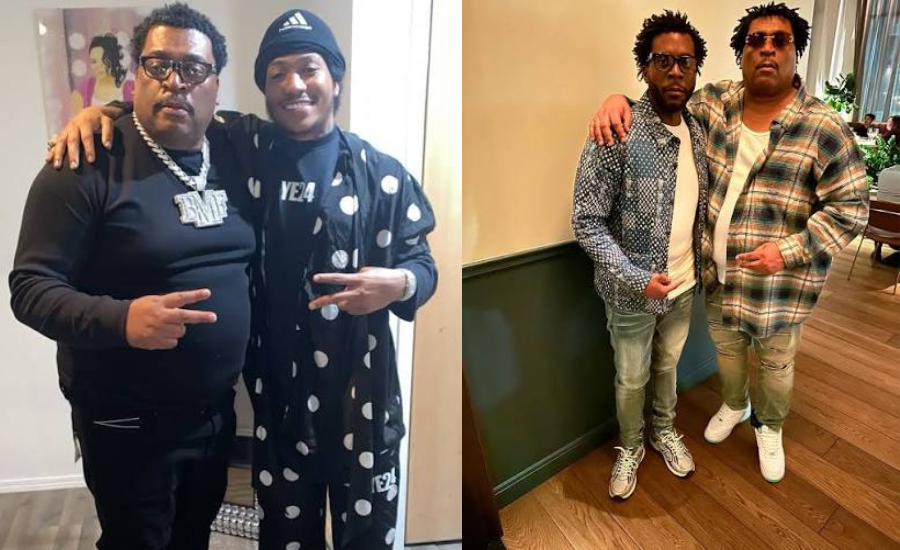
Terry Lee Flenory, also known as “Southwest T,” was an American criminal figure best known as the younger brother of Demetrius “Big Meech” Flenory and as a co-founder of the Black Mafia Family (BMF). He was born on January 10, 1970, in Detroit, Michigan. Alongside his brother, he helped establish BMF in the 1980s, an organization that became involved in large-scale cocaine trafficking and money laundering across several U.S. states.
Terry and Demetrius eventually became major figures in the U.S. drug trade before their organization was dismantled through a federal investigation. Terry pleaded guilty to federal charges and received a 30-year prison sentence in 2008. He was later transferred to home confinement in May 2020 after receiving compassionate release. He also became known to a wider audience through the Starz crime drama BMF, in which the fictionalized version of Terry “Southwest T” Flenory is portrayed by actor Da’Vinchi.
Biography Table
| Category | Details |
|---|---|
| Full Name | Terry Lee Flenory |
| Also Known As | Southwest T / Southwest Tee |
| Born | January 10, 1970, Detroit, Michigan (some lower-quality sources list 1972 — unconfirmed, 1970 is the more widely cited figure) |
| Nationality | American |
| Known For | Co-founder of the Black Mafia Family (BMF), a major U.S. drug trafficking and money-laundering organization |
| Older Brother | Demetrius “Big Meech” Flenory, BMF co-founder, born June 21, 1968 |
| Sister | Nicole Flenory, actress, appeared in the Starz series BMF |
| Parents | Reportedly Charles and Lucille Flenory (father’s involvement in his life is not well documented in reliable reporting; mother is identified as head of a Detroit nonprofit, Building More Families) |
| Criminal Role | Ran BMF’s Los Angeles operations, overseeing cocaine shipments arriving from Mexican suppliers |
| Arrest | October 2005, alongside his brother and dozens of associates |
| Sentence | 30 years in federal prison after pleading guilty in 2008 to running a continuing criminal enterprise |
| Release | Compassionate release to home confinement on May 5, 2020, citing health risk during the COVID-19 pandemic |
| Clemency | Sentence commuted by President Joe Biden in December 2024 |
| Relationship | Long-term relationship with Tonesa Welch, known as the “First Lady of BMF” — marital status disputed (see below) |
| Children | Reported but unconfirmed and inconsistently sourced (see Family section) |
| Net Worth | Estimates vary wildly, from roughly $10 million to $50 million or more — no verified figure exists |
| Pop Culture | Subject, alongside his brother, of the Starz drama BMF, portrayed by actor Da’Vinchi |
From Southwest Detroit to a Nationwide Operation
Terry Lee Flenory grew up in Detroit, Michigan, the younger of two brothers who would go on to build one of the most talked-about criminal organizations in recent American history. He and his older brother, Demetrius Edward Flenory, better known as “Big Meech,” reportedly began selling drugs on the streets of southwest Detroit in the mid-to-late 1980s, according to accounts corroborated by both journalistic coverage and the Wikipedia entry on the organization they built. What started as small-scale street dealing eventually became the Black Mafia Family, an operation that by the early 2000s had grown into a nationwide cocaine distribution network with direct ties to Mexican drug cartels. The organization’s name, commonly abbreviated as BMF, came into wider use around 2000, even though the brothers’ business had been running for well over a decade by that point.
The Flenory brothers split operational duties in a way that would come to define their partnership. Demetrius took charge of the Atlanta-based distribution side of the business, building relationships in the hip-hop and nightlife scenes that gave BMF its flashy, larger-than-life public image. Terry, by contrast, ran the organization’s Los Angeles hub, which handled incoming shipments from Mexico before they were distributed across the country. That division of labor, Meech as the face, Terry as the logistics man is one of the more consistently reported details of BMF’s structure across multiple sources, including Wikipedia’s account of the organization.
Read More: Omikaye Phifer
The Rise and Fall of BMF
By the early 2000s, BMF had expanded well beyond Detroit, with documented distribution networks stretching across states including Georgia, Alabama, Illinois, Louisiana, Michigan, Mississippi, Texas, and Ohio. The organization also launched BMF Entertainment as a front to launder drug proceeds and lend the brand a legitimate-looking public face, a move that placed the Flenorys in proximity to parts of the hip-hop industry during that era. That crossover into music and celebrity culture is a large part of why BMF became such a widely recognized name the organization wasn’t operating quietly in the shadows the way many trafficking networks do.
That visibility came at a cost. In October 2005, federal authorities arrested Terry Flenory, his brother, and a large number of BMF associates as part of a sweeping investigation into the organization’s drug trafficking and money laundering activities. Prosecutors alleged the operation had moved enormous quantities of cocaine across the country and generated hundreds of millions of dollars one widely cited prosecutorial estimate put the brothers’ combined proceeds at more than $270 million, though it’s worth noting that figures like this come from the prosecution’s case rather than independently audited financial records. Both brothers eventually pleaded guilty to running a continuing criminal enterprise, and in 2008 each was sentenced to 30 years in federal prison among the longest sentences ever handed down in a U.S. drug trafficking case.
Twelve Years In, and an Unexpected Way Out
Terry Flenory spent more than a decade behind bars before circumstances outside his control changed the trajectory of his sentence. His legal team had reportedly filed motions for a sentence reduction for years, citing good behavior, and the passage of the First Step Act in 2018 opened new legal avenues for such requests. It was ultimately the COVID-19 pandemic that provided the decisive opening: citing underlying health issues that put him at heightened risk inside a crowded federal facility, Flenory was granted compassionate release and transferred to home confinement on May 5, 2020, to serve out the remainder of his sentence there.
That outcome set him apart sharply from his brother. Demetrius’s own requests for a comparable compassionate release were repeatedly denied by the courts throughout the pandemic, even as his release date was gradually pushed earlier through separate sentence reductions first to 2028, then further adjusted before he was eventually moved to a residential reentry program. The brothers, who had built their empire together and were sentenced together, ended up on markedly different paths out of the federal system, a contrast that outlets covering the story have noted repeatedly.
The final chapter of Terry’s sentence came in December 2024, when President Joe Biden granted him clemency as part of a broader initiative aimed at people who had been released to home confinement during the pandemic. Flenory shared the news himself on Instagram, posting a photo of his clemency paperwork along with video of himself cutting off his home-confinement monitoring device, writing that “prayer and unwavering faith beyond mere human comprehension” had carried him to that point. The commutation effectively closed out a sentence that had, on paper, still had years left to run.
The Tonesa Welch Question
No account of Terry Flenory’s personal life is complete without Tonesa Welch, who became known publicly as the “First Lady of BMF.” Welch, born in Detroit in 1971, was closely tied to the organization during its peak years and, according to multiple reports, served time in connection with her own role in it one figure cited puts her sentence at close to five years, though exact court details are not consistently documented across sources. What is well established is her life after that chapter: Welch has become a public advocate for children affected by parental incarceration and for prison reform, and has worked as an executive producer on projects including “Notorious Queens” for WE tv and “American Gangster: Trap Queens” for BET+. Her own story was the subject of the documentary “First Lady of BMF: The Tonesa Welch Story,” which premiered on BET+ in October 2023.
Here’s where the record gets genuinely murky, and it’s worth being direct about that rather than picking a version and presenting it as settled fact: a large number of online biographies describe Welch as Terry Flenory’s wife, while others — including more recent write-ups describe them as former long-term partners who are “no longer together,” with no confirmed marriage on record. Some outlets frame their relationship as a decades-long romance shaped by BMF’s rise and fall; others treat “wife” as an informal label attached to her because of the nickname “First Lady.” In light of the contradiction, the truth is that Tonesa Welch and Terry Flenory had a long-standing, well-documented relationship related to the BMF era, but whether they were ever legally married and whether they remain together today is unconfirmed and disputed depending on the source.
Children: A Genuinely Unsettled Record
This is another area where the publicly available information contradicts itself enough that it would be irresponsible to present any single version as fact. Some sources name a son, Terry Lee Flenory Jr., along with a daughter, both reportedly connected to a woman named Rhonda Major. Others identify his son as Demetrius Flenory Jr., seemingly conflating him with his nephew (Big Meech’s own son, who performs and appears publicly as “Lil Meech”). Still other accounts describe a much larger family multiple marriages and several children with different names that isn’t corroborated by any verifiable reporting. Given how tightly Terry Flenory has kept his personal life out of the press, even relative to his brother, the most accurate statement that can be made is this: he is widely reported to have at least one child, but the number, names, and mother(s) of his children are not reliably confirmed, and readers should treat any specific claim on this topic with real skepticism.
Net Worth: Wide Estimates, No Verified Figure
Figures attached to Terry Flenory’s net worth vary enormously across the sites that cover him some cite $10 million, others $40 million, and some go as high as $50 million or attach a $300 million valuation to BMF as an enterprise rather than to Terry personally. None of these numbers appear to be backed by audited financial disclosures, tax records, or court-verified asset figures; they read as estimates built on BMF’s reported drug proceeds during its operational years rather than Terry Flenory’s current, post-incarceration financial standing. Given that he spent roughly fifteen years in custody or under supervision, much of the wealth associated with BMF’s peak would also have been subject to asset forfeiture as part of the federal case. Any specific net worth figure attached to him today should be read as speculative.
Life After Prison and the BMF Series
Since his 2020 release, Terry Flenory has kept a noticeably lower public profile than his brother, whose story has become the basis of the Starz drama series BMF, which premiered in September 2021 and dramatizes the family’s rise in the Detroit and Atlanta drug trade. Terry is portrayed in the series by actor Da’Vinchi. While Big Meech has leaned into the public attention that followed his own more recent release and the show’s success, Terry has been comparatively quiet, engaging with fans primarily through social media rather than interviews or public appearances a pattern that fits with how limited and inconsistent the public record of his personal life remains.
FAQs
Who is Terry Lee Flenory?
He’s the co-founder, alongside his older brother Demetrius “Big Meech” Flenory, of the Black Mafia Family, a Detroit-founded drug trafficking and money-laundering organization that operated nationally from the late 1980s until the mid-2000s.
What was Terry Flenory’s role in BMF?
He ran the organization’s Los Angeles operations, managing the receipt and distribution of cocaine shipments arriving from Mexican suppliers, while his brother handled the Atlanta-based distribution and public-facing side of the business.
How long was Terry Flenory in prison?
He was sentenced to 30 years in 2008 after pleading guilty. He was released to home confinement in May 2020 through a COVID-related compassionate release, and his sentence was fully commuted by President Biden in December 2024.
Is Terry Flenory married?
This is disputed. He had a long, publicly documented relationship with Tonesa Welch, the so-called “First Lady of BMF,” but reliable sources disagree on whether the two were ever legally married, and on their current relationship status.
Does Terry Flenory have children?
He is widely reported to have at least one child, but the specific number, names, and mother(s) vary significantly between sources and are not verifiably confirmed.
What is Terry Flenory’s net worth?
There is no verified figure. Public estimates range broadly, from around $10 million to $50 million, and appear to be speculative rather than based on confirmed financial records.
Is Terry Flenory in the Starz series BMF?
Yes — the show is based on the Flenory brothers’ story, and Terry is portrayed by actor Da’Vinchi.
Conclusion
Terry Lee Flenory’s story is really two stories stitched together: the well-documented rise and fall of a nationwide drug empire he built with his brother, and a personal life that, by contrast, has stayed almost entirely out of public view. The broad strokes are clear and consistently corroborated the Detroit origins, the Los Angeles operation he ran, the 2005 arrest, the 30-year sentence, and the unusual, pandemic-driven path that eventually led to his freedom and, later, a presidential commutation.
What’s far less clear is everything closer to home: his relationship status, the makeup of his family, and the true scale of his wealth today. Rather than smoothing over those gaps the way much of the coverage online does, the honest version of Terry Flenory’s biography is one that draws a clear line between what’s been established and what remains, at best, an educated guess.
Leave a Reply